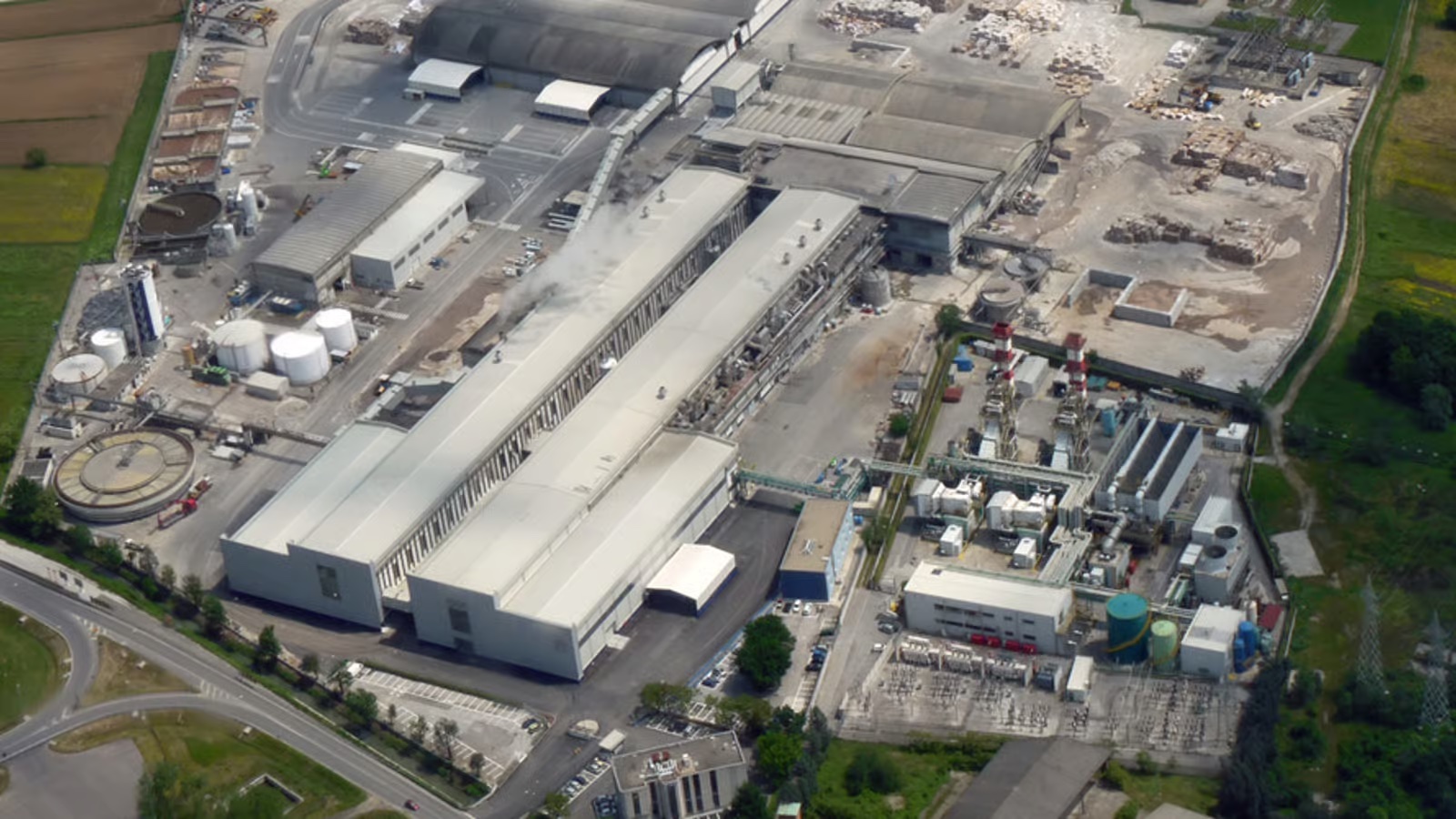
In a production setting, efficiency and documentation reinforce each other. TimelapseLab is supporting DS Smith with the monitoring of the construction site in Lucca, with a service that accompanies the project for its entire duration.
The installed device is connected to the TimelapseLab cloud platform and captures images at regular intervals, which feed into a searchable archive. The same collection is used to produce time-lapse content capable of summarising months of activity in just a few minutes.
The province of Lucca is one of Italy’s hubs for paper and packaging production, a sector where plants run on continuous cycles and structural works have to fit into the few windows available. Every shutdown has a measurable cost, and this makes scheduling more rigid than in ordinary construction.
Under these conditions, remote progress checks are not just an organisational convenience. They show whether a phase is keeping to the agreed window while there is still time to act, and they give plant management independent evidence to share without having to arrange access to the site area.
On an active production site, visual documentation also serves those who are not following the works. Plant functions – production, maintenance, safety – need to know when an area will become available again and in what condition, and obtaining that information normally involves a chain of steps. A searchable archive shortens that chain: everyone can check the status of the area directly, without having to ask someone else.
Inside an operating plant, every task must be coordinated with production shifts and with planned shutdown windows. Periodic documentation records exactly when those windows were used and how productive each one was: information that, in subsequent assessments, is worth more than many estimates, and that makes it possible to better size the shutdowns needed for future works.
Site monitoring in Lucca documents the construction process through periodic images, distinct from continuous video surveillance, with automatic blurring of faces and number plates in line with a GDPR-by-design approach.